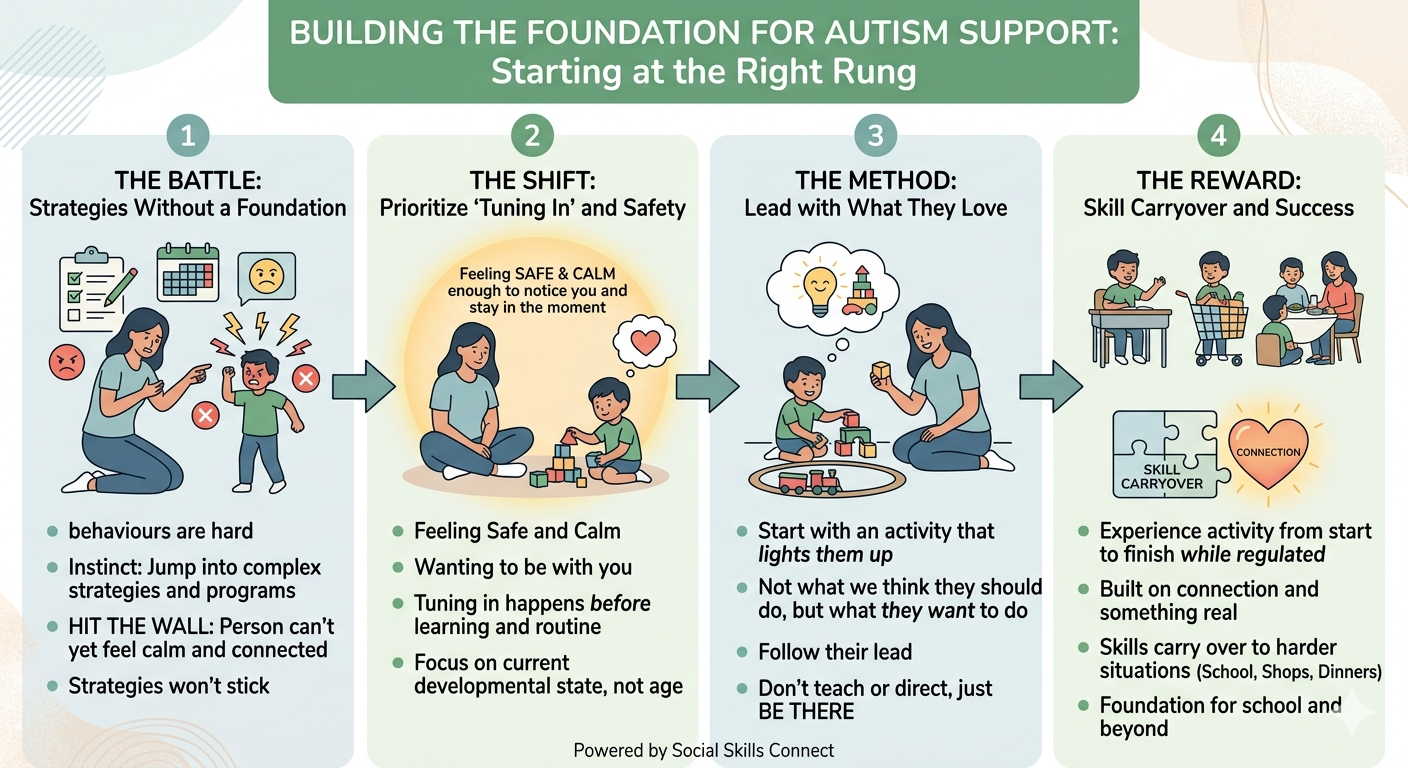
If you're supporting someone with autism and feel like nothing is working, this might help.
Before someone can learn, communicate, follow a routine, or manage their emotions, they need to be able to do one thing first. They need to be able to tune in.
That means feeling safe and calm enough to notice you're there, to want to be with you in that moment, and to stay in it.
That's where we start. And it doesn't matter if the person you're supporting is 5 or 50. It's not about age. It's about where they are developmentally.
I know that when behaviours are hard and every day feels like a battle, the instinct is to jump straight into strategies and programs. I get it. But if the person can't yet feel calm and connected with you, those strategies are not going to stick. You'll keep hitting the same wall.
So what actually works?
Start with something they love. Something that lights them up. Not what we think they should be doing, but what they actually want to do. That's when they are most open to connection. That's when tuning in can happen naturally.
Then just be in it with them. Follow their lead. Don't direct it. Don't teach. Just be there.
The goal is for them to experience an activity from start to finish while feeling regulated and connected to you. When they can do that in something they enjoy, they start doing it in harder situations too. At school. At the shops. At a family dinner. The skill carries over because it was built on something real.
I know it can feel slow. I know it can feel like you're not doing enough. But you're building the foundation that everything else depends on.
If you're struggling right now, you're not failing. You might just be starting at the wrong rung.